

Moringa oleifera Perennial Karnataka | 5_Seeds
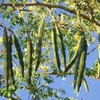
These seeds were collected from Moringa oleifera Perennial Karnata. Compared to spinach, moringa leaves contain 100 times more calcium and 30 times more iron. These wonderful fragrant flowers bloom from late Spring until early Summer. This tree likes to live in the full sun where it can grow to about 40 feet high at most. The young seed pods and the leaves are used as vegetables. Surprisingly this fast growing tree can be grown as an annual and the seed pods in the first year are edible while the seed pods in the second year are bitter and inedible. Oil can be obtained from the seeds. This oil is used as a food product, in cosmetics, and for hair and skin. It has edible roots, seeds, flowers, and pods. It is rich in potassium, iron, calcium, vitamin C, and vitamin A. The leaves can be eaten fresh or cooked and contains 18 amino acids including the 9 essential amino acids. The roots taste a little bit like horseradish, hence the name horseradish tree. This plant is amazingly drought resistant. USDA Hardiness Zones 9 to 11.
Specifications
| Return Shipping Will Be Paid By | Seller |
| All Returns Accepted | Returns Accepted |
| Item Must Be Returned Within | 30 Days |
| Refund Will Be Given As | Money Back |
These seeds were collected from Moringa oleifera Perennial Karnata. Compared to spinach, moringa leaves contain 100 times more calcium and 30 times more iron. These wonderful fragrant flowers bloom from late Spring until early Summer. This tree likes to live in the full sun where it can grow to about 40 feet high at most. The young seed pods and the leaves are used as vegetables. Surprisingly this fast growing tree can be grown as an annual and the seed pods in the first year are edible while the seed pods in the second year are bitter and inedible. Oil can be obtained from the seeds. This oil is used as a food product, in cosmetics, and for hair and skin. It has edible roots, seeds, flowers, and pods. It is rich in potassium, iron, calcium, vitamin C, and vitamin A. The leaves can be eaten fresh or cooked and contains 18 amino acids including the 9 essential amino acids. The roots taste a little bit like horseradish, hence the name horseradish tree. This plant is amazingly drought resistant. USDA Hardiness Zones 9 to 11.
Related Items