

Japanese Red Cedar Tree Seeds (Cryptomeria japonica) Sugi Evergreen or Bonsai
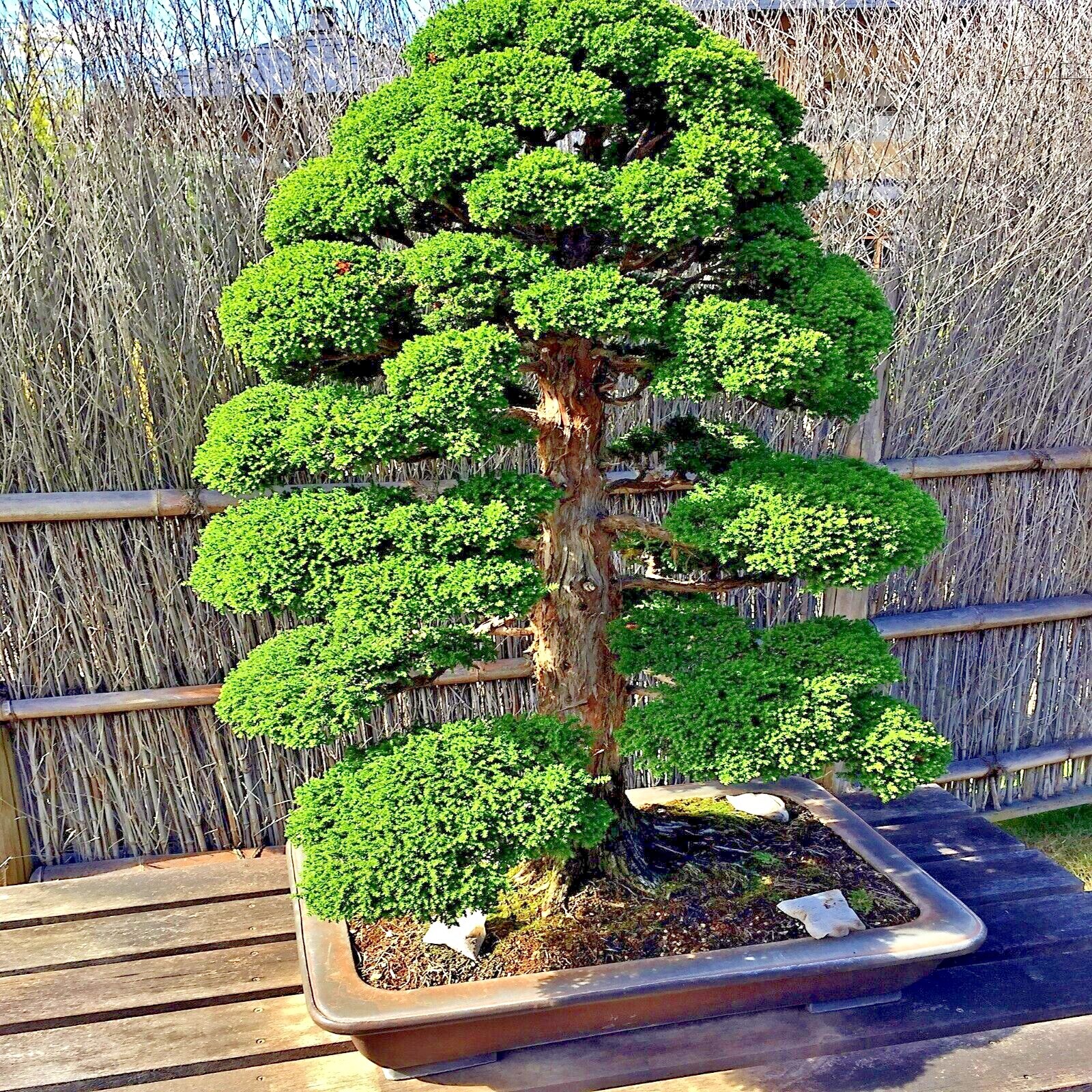
Japanese Red Cedar Tree Seeds(Cryptomeria japonica) "Sugi" "20 SEEDS"Native to Japan, the Japanese Red Cedar while called a cedar, isn't related to the Cedar tree in any way. it was introduced into the UK in 1861. It's the only species found in the genus. It's a large, long lived, conical evergreen tree. It's dark green needles are slightly curving, and arranged spirally around the leaf shoots measuring around a cm in length. The branches are horizontally spreading, and composed of many branchlets, which gives the tree it's dense foliage. The bark of the tree is a red brownish color that peels in vertical strips. It can reach heights of 180 feet tall, and a trunk that can reach a diameter of 12 feet. Spreading out to around 35 foot wide, make's it a great shade tree, great for landscaping, and a great candidate for a bonsai. Very easy to grow with Low maintenance and a Very Gast Rate of Growth.Requirements:Zones: 5~9Light: Full Sun to light shadeSoil: Moist, well drainedRed Cedar Germination: 1) Soak the seeds in water for 24 hours. Fully drain away all of the water and place the seeds in a zip-lock freezer bag. Place the seeds in the fridge, it is important that during this period that the seeds do not dry out or are waterlogged otherwise the pre-treatment will be ineffective. It is important to keep checking the seeds every week or so to make sure that they are not drying out. You could also at the start of treatment incorporate a little damp vermiculite or perlite, this helps to keep the seeds moist but not waterlogged.2) After between 4 and 6 weeks under these conditions the seeds are ready to be sown. In general, many seeds will fail to germinate unless being put through cold stratification. Simply sowing untreated seeds in compost at room temperature will not break down the dormancy and germination will be disappointing.3) Fill your chosen container with a good quality general potting compost. Suitable containers could be plant pots, seed trays or plug trays or even improvised containers with drainage holes. Firm the compost gently and sow the seeds on the surface. If you are sowing in plug trays, sow 2 or 3 seeds per cell.4) Cover the seeds with a couple of millimeters of vermiculite or failing that a fine layer of sieved compost. Follow with a gentle watering and keep them at room temperature. Germination will begin within a few weeks of sowing. Germinación del cedro rojo:1) Remoje las semillas en agua durante 24 horas. Escurra completamente el agua y coloque las semillas en una bolsa con cierre hermético para congelar. Coloque las semillas en el refrigerador, es importante que durante este período las semillas no se sequen ni se encharquen, de lo contrario, el tratamiento previo será ineficaz. Es importante revisar las semillas aproximadamente una vez por semana para asegurarse de que no se sequen. También puede incorporar al comienzo del tratamiento un poco de vermiculita o perlita húmeda, esto ayuda a mantener las semillas húmedas pero no encharcadas.2) Después de entre 4 y 6 semanas en estas condiciones, las semillas están listas para ser sembradas. En general, muchas semillas no germinarán a menos que se sometan a una estratificación en frío. Simplemente sembrar semillas sin tratar en abono a temperatura ambiente no romperá la latencia y la germinación será decepcionante.3) Llene el recipiente elegido con un abono para macetas general de buena calidad. Los recipientes adecuados pueden ser macetas, bandejas para semillas o bandejas para semilleros o incluso recipientes improvisados con orificios de drenaje. Apisonar suavemente el compost y sembrar las semillas en la superficie. Si se siembra en bandejas de alvéolos, sembrar 2 o 3 semillas por celda.4) Cubrir las semillas con un par de milímetros de vermiculita o en su defecto con una fina capa de compost tamizado. Seguir con un riego suave y mantenerlas a temperatura ambiente. La germinación comenzará a las pocas semanas de la siembra.Will ship as soon as payment is received. "BUY WITH CONFIDENCE!!!"As Customer Service is our #1 Priority.
Specifications
| Return Shipping Will Be Paid By | Seller |
| All Returns Accepted | Returns Accepted |
| Item Must Be Returned Within | 30 Days |
| Climate | Highland |
| Common Name | Japanese Red Cedar Tree |
| Color | Beige |
| Indoor/Outdoor | Indoor & Outdoor |
| Growth Habit | Climbing |
| MPN | N/A |
| Brand | SeedHead |
| Soil PH | Acidic |
| Season Of Interest | Fall |
| Type | Tree Seeds |
| Life Cycle | Perennial |
| Watering | Medium |
| Genus | Cryptomeria |
| Sunlight | Partial Shade |
| Features | Deer Resistant |
| Cultivating Difficulty | Moderate |
| Country/Region Of Manufacture | Japan |
Japanese Red Cedar Tree Seeds(Cryptomeria japonica) "Sugi" "20 SEEDS"Native to Japan, the Japanese Red Cedar while called a cedar, isn't related to the Cedar tree in any way. it was introduced into the UK in 1861. It's the only species found in the genus. It's a large, long lived, conical evergreen tree. It's dark green needles are slightly curving, and arranged spirally around the leaf shoots measuring around a cm in length. The branches are horizontally spreading, and composed of many branchlets, which gives the tree it's dense foliage. The bark of the tree is a red brownish color that peels in vertical strips. It can reach heights of 180 feet tall, and a trunk that can reach a diameter of 12 feet. Spreading out to around 35 foot wide, make's it a great shade tree, great for landscaping, and a great candidate for a bonsai. Very easy to grow with Low maintenance and a Very Gast Rate of Growth.Requirements:Zones: 5~9Light: Full Sun to light shadeSoil: Moist, well drainedRed Cedar Germination: 1) Soak the seeds in water for 24 hours. Fully drain away all of the water and place the seeds in a zip-lock freezer bag. Place the seeds in the fridge, it is important that during this period that the seeds do not dry out or are waterlogged otherwise the pre-treatment will be ineffective. It is important to keep checking the seeds every week or so to make sure that they are not drying out. You could also at the start of treatment incorporate a little damp vermiculite or perlite, this helps to keep the seeds moist but not waterlogged.2) After between 4 and 6 weeks under these conditions the seeds are ready to be sown. In general, many seeds will fail to germinate unless being put through cold stratification. Simply sowing untreated seeds in compost at room temperature will not break down the dormancy and germination will be disappointing.3) Fill your chosen container with a good quality general potting compost. Suitable containers could be plant pots, seed trays or plug trays or even improvised containers with drainage holes. Firm the compost gently and sow the seeds on the surface. If you are sowing in plug trays, sow 2 or 3 seeds per cell.4) Cover the seeds with a couple of millimeters of vermiculite or failing that a fine layer of sieved compost. Follow with a gentle watering and keep them at room temperature. Germination will begin within a few weeks of sowing. Germinación del cedro rojo:1) Remoje las semillas en agua durante 24 horas. Escurra completamente el agua y coloque las semillas en una bolsa con cierre hermético para congelar. Coloque las semillas en el refrigerador, es importante que durante este período las semillas no se sequen ni se encharquen, de lo contrario, el tratamiento previo será ineficaz. Es importante revisar las semillas aproximadamente una vez por semana para asegurarse de que no se sequen. También puede incorporar al comienzo del tratamiento un poco de vermiculita o perlita húmeda, esto ayuda a mantener las semillas húmedas pero no encharcadas.2) Después de entre 4 y 6 semanas en estas condiciones, las semillas están listas para ser sembradas. En general, muchas semillas no germinarán a menos que se sometan a una estratificación en frío. Simplemente sembrar semillas sin tratar en abono a temperatura ambiente no romperá la latencia y la germinación será decepcionante.3) Llene el recipiente elegido con un abono para macetas general de buena calidad. Los recipientes adecuados pueden ser macetas, bandejas para semillas o bandejas para semilleros o incluso recipientes improvisados con orificios de drenaje. Apisonar suavemente el compost y sembrar las semillas en la superficie. Si se siembra en bandejas de alvéolos, sembrar 2 o 3 semillas por celda.4) Cubrir las semillas con un par de milímetros de vermiculita o en su defecto con una fina capa de compost tamizado. Seguir con un riego suave y mantenerlas a temperatura ambiente. La germinación comenzará a las pocas semanas de la siembra.Will ship as soon as payment is received. "BUY WITH CONFIDENCE!!!"As Customer Service is our #1 Priority.
Related Items