


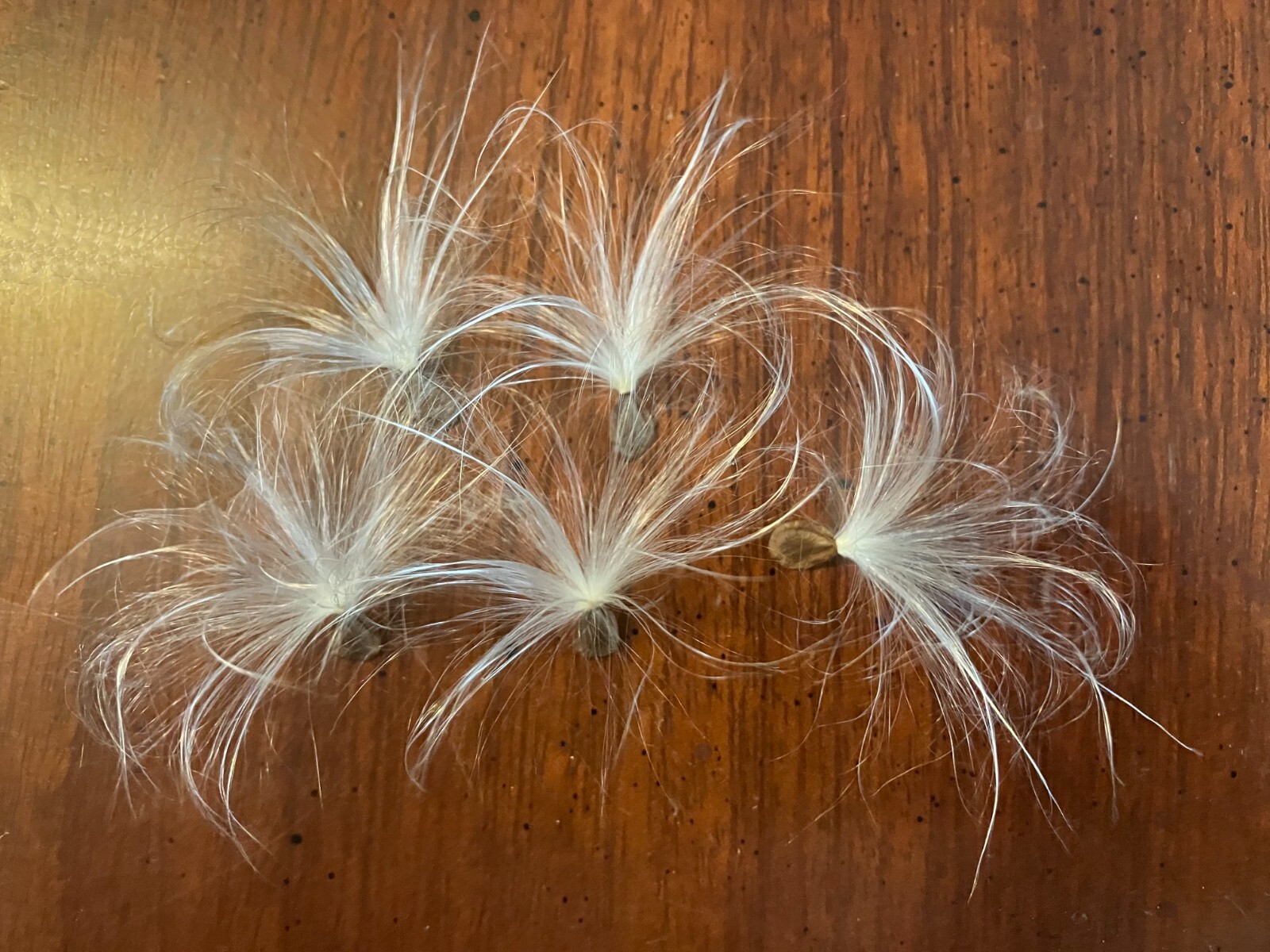

100+ Common Milkweed Seeds, Attract Monarch Butterflies*
100+ Common Milkweed Seed, organic, non-GMO that has been wild harvested in the Blue Ridge Mountains in Virginia. Grown in USDA zone 7a. Our seeds are harvested on our acreage, near a spring feed creek that has not been contaminated by herbicides, insecticides or any chemical sprays. I measure the seeds by weight. I counted out 150 seeds and weighed them at 1.8 grams, so instead of counting each order, I just weigh out 1.8 grams. Common milkweed not only provides nectar for butterflies, bees, and other pollinators but is a larval host plant for Monarch butterflies. Common milkweed is a deciduous, native, herbaceous perennial wildflower in the Apocynaceae (dogbane) family. It grows in average, well-drained soils in full sun but can tolerate poor or dry soils. It propagates easily by seed or root cuttings and will naturalize in the garden, taking up quite a bit of space. In summer, five-petaled flowers bloom with up to 100 flowers per cluster and one to three clusters per stem. Fragrant flowers in colors of green, pink, white, and purple or lavender will last from June through August. Plants can grow 3 to 4 feet tall. Leaf arrangement is opposite and is oblong in shape with reddish veins.Common milkweed can be used in naturalized areas, meadows, and butterfly, native, or pollinator gardens.****Please Note:**** My milkweed is growing in USDA Zone 7, and currently (July) has grown to 4' and has flowered. Milkweed is a seasonal plant and should be broadcast in the fall for spring growth or Cold Stratified in winter for spring planting. DO NOT expect good results if planted out of season! ***How to Cold Stratify Your Seeds***
Specifications
| All Returns Accepted | ReturnsNotAccepted |
| Climate | Cold |
| Germination Ease | Cold Stratification |
| Indoor/Outdoor | Outdoor |
| Color | Pinkish Purple, White |
| USDA Hardiness Zone (°F) | Zones 2-8 |
| Plant Habit | Clump-forming |
| Soil Type | Clay |
| Brand | Unbranded |
| Season Of Interest | Fall |
| Type | Flower Seeds |
| Watering | Medium |
| Life Cycle | Perennial |
| Genus | Asclepias syriaca |
| Sunlight | Full Sun |
| Cultivating Difficulty | Easy |
| Country/Region Of Manufacture | United States |
100+ Common Milkweed Seed, organic, non-GMO that has been wild harvested in the Blue Ridge Mountains in Virginia. Grown in USDA zone 7a. Our seeds are harvested on our acreage, near a spring feed creek that has not been contaminated by herbicides, insecticides or any chemical sprays. I measure the seeds by weight. I counted out 150 seeds and weighed them at 1.8 grams, so instead of counting each order, I just weigh out 1.8 grams. Common milkweed not only provides nectar for butterflies, bees, and other pollinators but is a larval host plant for Monarch butterflies. Common milkweed is a deciduous, native, herbaceous perennial wildflower in the Apocynaceae (dogbane) family. It grows in average, well-drained soils in full sun but can tolerate poor or dry soils. It propagates easily by seed or root cuttings and will naturalize in the garden, taking up quite a bit of space. In summer, five-petaled flowers bloom with up to 100 flowers per cluster and one to three clusters per stem. Fragrant flowers in colors of green, pink, white, and purple or lavender will last from June through August. Plants can grow 3 to 4 feet tall. Leaf arrangement is opposite and is oblong in shape with reddish veins.Common milkweed can be used in naturalized areas, meadows, and butterfly, native, or pollinator gardens.****Please Note:**** My milkweed is growing in USDA Zone 7, and currently (July) has grown to 4' and has flowered. Milkweed is a seasonal plant and should be broadcast in the fall for spring growth or Cold Stratified in winter for spring planting. DO NOT expect good results if planted out of season! ***How to Cold Stratify Your Seeds***
Related Items


