

1000+ Annuals & Perennials WildFlower Mix Heirloom Pollinator Non-GMO Fresh Seed
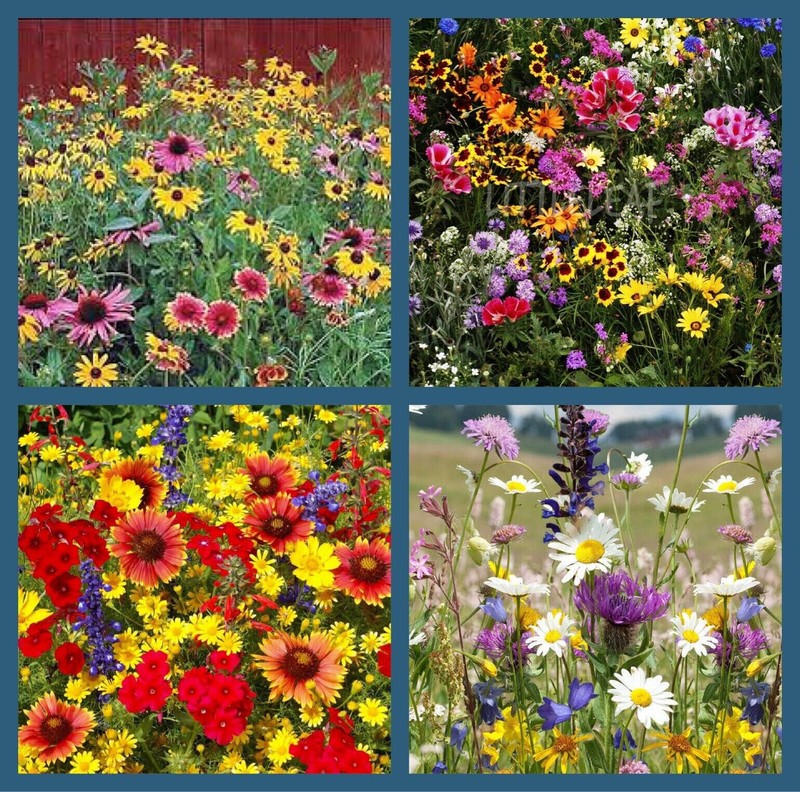
1000+ Annuals & Perennials Wild-Flower Seed Mix for 2024 from my, "Brooklyn Botanical Garden's Club And We Liked These the Best! If YOU REQUESTED FREE SHIPPING, It comes without any tracking numbers. If you need to get it sooner with tracking, Please pay for USPS Ground Advantage...Thank You! Annual, Perennial and Biennial Wildflower Seed Mix If your plan is to sit back and let Mother Nature do her thing, then this is probably the wildflower mix for you. Once you've done the proper soil prep and sowed the seed, you're done! Our Annual & Perennial Wildflower Seed Mix contains many of the most beloved flowers, including Lupine, Flax, Coreopsis, and Shasta Daisy. Suitable for all regions of North America. What to Expect from Annuals: As with most Annuals, the best time to plant would be in the early spring after the threat of cold winter has gone. What to Expect from Perennials: As with most perennials, the best time to plant would be, in late summer or an early fall once temperatures have started to cool but way before the ground freezes. And snow is many weeks away. The first season you plant the Wildflower Mix, you'll see many plants growing, with most of them beginning to bloom in a few months. But most of the Perennial varieties will only show limited germination in their first season. Because they won't bloom to their full potential until the following growing season. SEED CONTENTS Name: Annual & Perennial Wildflower Seed Mix including the Bonus SunFlowers Number of Species: 20 or More Varieties Contents: Siberian Wallflower, Shasta Daisy, Lance Leaf Coreopsis,Sweet William, Foxglove, Purple Coneflower, Blanketflower, Blue Flax, Perennial Lupine, Mexican Hat, Gloriosa Daisy, Black Eyed Susan, Candytuft, Gayfeather/Blazing Star, Maltese CrossCosmos Coreopsis Plains Sunspot SunFlowersVelvet Queen SunFlowers Grey Stripe SunFlowersBlack Oil SunFlowers Life Cycle: 100% Perennial / Biennial Light Requirement: Full Sun / Part Sun Planting Season: Early Spring, Late Fall Features: Attracts Pollinators, Attracts Hummingbirds, Easy to Grow & Maintain Color: Mixed Blooms: Spring, Summer, Fall Plant Height: 25+ inches Planting Depth: 1/2 inch Sowing Method: Direct Sow Cold Stratification: No Hardiness Zones: 3, 4, 5, 6, 7, 8, 9, 10 MIX CONTENTS Black Eyed Susan Rudbeckia hirta Blanketflower Gaillardia aristata Blue Flax Linum lewisii Candytuft Iberis umbellata Foxglove Digitalis purpurea Gayfeather/Blazing Star Liatris spicata Gloriosa Daisy Rudbeckia gloriosa Perennial / Biennial Lance Leaf Coreopsis Coreposis lanceolata Perennial Maltese Cross Lychnis chalcedonica Perennial Mexican Hat Ratibida columnaris Perennial / Biennial Perennial Lupine Lupinus perennis Perennial Purple Coneflower Echinacea purpurea Perennial Shasta Daisy Chrysanthemum leucanthemum Perennial Siberian Wallflower Cheiranthus allioni Perennial / Biennial Sweet William Dianthus barbutus Perennial PLANTING INSTRUCTIONS Annual instructions For most temperate regions of the United States, spring planting is best carried out within a month or so after the final frost of the winter season. The exact date will naturally vary based on your region and the severity of the winter season Perennial Instructions While the All Perennial Mix doesn't require cold stratification to germinate, the best times to plant are either in early Spring or late Summer, once temperatures have started to cool but with your first expected frost still a few weeks away. . PLANTING INSTRUCTIONS While the All Perennial Mix doesn't require cold stratification to germinate, the best times to plant are either in early Spring or late Summer. For most temperate regions of the United States, spring planting is best carried out within a month or so after the final frost of the winter season. The exact date will naturally vary based on your region and the severity of the winter season. The important thing is to not ?jump the gun? and plant too early; if seeds are installed prior to a late-season frost, they will be lost for the season and will need to be re-seeded. For All Perennial Mix, a late summer or early fall planting is recommended, once temperatures have started to cool but with your first expected frost still a few weeks out. For areas that tend to have little to no frost (Florida, Texas, California, etc..), wildflower can be planted all year round except in the dead of summer. For areas that get a hard, killing frost (Indiana, New York, Minnesota, etc..), wildflower should be planted in spring, summer and fall. Most wildflower mixes unless otherwise noted need at least 6 hours of sun to perform well. Full sun all day will give best results. Preparing the Soil: Remove all vegetation from the area where wildflower seed will be sowed. Remove any plants, till the soil and rake the area flat. If soil is a hard, no draining clay soil then compost should be added to help aid drainage. Planting Wildflower: Sand should be added to wildflower mixes that do not have filler already mixed in. Sand will help spread seeds better without clumps and can be seen better to aid in spreading. with sand for better visibility and scatter the seeds directly on top of the soil. If you are sowing a larger area, we recommend using a seed spreader if not, you can sow by hand. After the seeds has been spread out they should be lightly compressed into the soil, making sure not to bury them but compressed enough so rain and wind will not remove them. You can either walk on them, use a board or if you are sowing a larger area, rent a seed roller. Growing Wildflower: It is important to keep the soil moist until the seedlings are about 4-6? tall. After that, the seedlings will survive on natural rains. During dry weather the occasional watering will help. Do not let soil dry out while they are seedlings are this will kill the plants. Caring for Wildflower: Once a year the wildflower meadow should be mowed over. Wait until late fall when all the flowers have bloomed and dropped their seeds. Then with a weed trimmer, or a mower set on a tallest setting, mow over the entire meadow of wildflower. This will encourage strong growth in the spring without competing with dead old foliage. COLD STRATIFYING: Everyone wants plants. Now. But there are a small group of seeds that require a special treatment before they will even germinate in a climate that has temperatures below freezing. This process is called ?Cold Stratification.? There are two ways to accomplish this. Leave them in a cold area during the winter or in your refrigerator for at least 10 weeks . Or Create a "False Winter": The second way to do this, if you want to save time getting your seeds started. What this does is trick the seeds into thinking they have been in the ground for an entire year. All they need is to be in your refrigerator for at least 2 ½ months. About 3 months before spring, place seeds in a plastic bag with a handful of slightly dampened, clean peat, paper towel, or a mix of clean peat and sand. Seal and label the bag with seed name and date, then store in the refrigerator (not freezer) for at least 2½ mos. before planting in spring. (The cold period mimics a full winter?s cold.)place them in a wet Scott towel or wet sand in your refrigerator for 2-3 weeks before planting them, this will force them to life quicker. Fall Planting: If time is not a problem, you can put them in the ground in fall and let them go through a winter. They will sprout next year, but not flower. The following year, having gone through two winters, they will return and bloom as expected. If you are planting them now, direct sowing is recommended in late fall or early spring for zones 2-8 Create a "False Winter": The second way to do this, if you want to save time, is to create a ?false winter.? What this does is trick the seeds into thinking they have been in the ground for an entire year. All they need is to be in your refrigerator for at least 2 ½ months. About 3 months before spring, place seeds in a plastic bag with a handful of slightly dampened, clean peat, paper towel, or a mix of clean peat and sand. Seal and label the bag with seed name and date, then store in the refrigerator (not freezer) for at least 2½ mos. before planting in spring. (The cold period mimics a full winter?s cold.) Please Note Our Return Policy At SaveDoe: THERE'S NEVER ANY RESTOCKING FEES ON ANYTHING YOU PURCHASE and We Will Insure your Satisfaction on Every Item! If There's Ever A Problem, Just Let US Know and We'll Respond with a Solution, Giving You, Our Customer, "Pure Total Satisfaction" no questions asked! We Resolve All Complaints Directly, Just select, "ASK A QUESTION" to the seller. WE ARE STANDING BY TO SERVICE YOUR NEEDS! When You Shop at SAVEDOE, You'll Always Buy with Confidence and A Money Back Guarantee Promise! Refunds are Always Available at the Customer's Request, up to 30 days After you Receive your Item. We Thank You for Your Warm Support and Are Committed to Providing You with the Best Customer Service Anywhere! From Your Friends at SAVEDOE.
Specifications
| Return Shipping Will Be Paid By | Buyer |
| All Returns Accepted | Returns Accepted |
| Item Must Be Returned Within | 30 Days |
| Refund Will Be Given As | Money Back |
| Climate | Highland |
| Hardiest Zones 3, 4, 5, 6, 7, 8, 9, 10 | Fresh For 2024 |
| Common Name | Various Flowering Seeds |
| Indoor/Outdoor | Indoor & Outdoor |
| Growth Habit | Various Types |
| Country Of Manufacture | United States |
| Plant Habit | As Shown |
| Aspect | East-facing |
| Soil Type | Normal to Poor soils |
| Genus | 18 Different Types |
| Foliage | Some are Evergreen |
| Features | Air Purifying |
| Planting Time | Various |
| Color | Various Colors |
| California Prop 65 Warning | None |
| Soil PH | Neutral to Poor |
| Watering | Light to Medium |
| Life Cycle | Annual & Perennial |
| Sunlight | Full Sun |
| Cultivating Difficulty | Moderate |
| Country/Region Of Manufacture | United States |
| Brooklyn, New York | Fresh for 2024 |
1000+ Annuals & Perennials Wild-Flower Seed Mix for 2024 from my, "Brooklyn Botanical Garden's Club And We Liked These the Best! If YOU REQUESTED FREE SHIPPING, It comes without any tracking numbers. If you need to get it sooner with tracking, Please pay for USPS Ground Advantage...Thank You! Annual, Perennial and Biennial Wildflower Seed Mix If your plan is to sit back and let Mother Nature do her thing, then this is probably the wildflower mix for you. Once you've done the proper soil prep and sowed the seed, you're done! Our Annual & Perennial Wildflower Seed Mix contains many of the most beloved flowers, including Lupine, Flax, Coreopsis, and Shasta Daisy. Suitable for all regions of North America. What to Expect from Annuals: As with most Annuals, the best time to plant would be in the early spring after the threat of cold winter has gone. What to Expect from Perennials: As with most perennials, the best time to plant would be, in late summer or an early fall once temperatures have started to cool but way before the ground freezes. And snow is many weeks away. The first season you plant the Wildflower Mix, you'll see many plants growing, with most of them beginning to bloom in a few months. But most of the Perennial varieties will only show limited germination in their first season. Because they won't bloom to their full potential until the following growing season. SEED CONTENTS Name: Annual & Perennial Wildflower Seed Mix including the Bonus SunFlowers Number of Species: 20 or More Varieties Contents: Siberian Wallflower, Shasta Daisy, Lance Leaf Coreopsis,Sweet William, Foxglove, Purple Coneflower, Blanketflower, Blue Flax, Perennial Lupine, Mexican Hat, Gloriosa Daisy, Black Eyed Susan, Candytuft, Gayfeather/Blazing Star, Maltese CrossCosmos Coreopsis Plains Sunspot SunFlowersVelvet Queen SunFlowers Grey Stripe SunFlowersBlack Oil SunFlowers Life Cycle: 100% Perennial / Biennial Light Requirement: Full Sun / Part Sun Planting Season: Early Spring, Late Fall Features: Attracts Pollinators, Attracts Hummingbirds, Easy to Grow & Maintain Color: Mixed Blooms: Spring, Summer, Fall Plant Height: 25+ inches Planting Depth: 1/2 inch Sowing Method: Direct Sow Cold Stratification: No Hardiness Zones: 3, 4, 5, 6, 7, 8, 9, 10 MIX CONTENTS Black Eyed Susan Rudbeckia hirta Blanketflower Gaillardia aristata Blue Flax Linum lewisii Candytuft Iberis umbellata Foxglove Digitalis purpurea Gayfeather/Blazing Star Liatris spicata Gloriosa Daisy Rudbeckia gloriosa Perennial / Biennial Lance Leaf Coreopsis Coreposis lanceolata Perennial Maltese Cross Lychnis chalcedonica Perennial Mexican Hat Ratibida columnaris Perennial / Biennial Perennial Lupine Lupinus perennis Perennial Purple Coneflower Echinacea purpurea Perennial Shasta Daisy Chrysanthemum leucanthemum Perennial Siberian Wallflower Cheiranthus allioni Perennial / Biennial Sweet William Dianthus barbutus Perennial PLANTING INSTRUCTIONS Annual instructions For most temperate regions of the United States, spring planting is best carried out within a month or so after the final frost of the winter season. The exact date will naturally vary based on your region and the severity of the winter season Perennial Instructions While the All Perennial Mix doesn't require cold stratification to germinate, the best times to plant are either in early Spring or late Summer, once temperatures have started to cool but with your first expected frost still a few weeks away. . PLANTING INSTRUCTIONS While the All Perennial Mix doesn't require cold stratification to germinate, the best times to plant are either in early Spring or late Summer. For most temperate regions of the United States, spring planting is best carried out within a month or so after the final frost of the winter season. The exact date will naturally vary based on your region and the severity of the winter season. The important thing is to not ?jump the gun? and plant too early; if seeds are installed prior to a late-season frost, they will be lost for the season and will need to be re-seeded. For All Perennial Mix, a late summer or early fall planting is recommended, once temperatures have started to cool but with your first expected frost still a few weeks out. For areas that tend to have little to no frost (Florida, Texas, California, etc..), wildflower can be planted all year round except in the dead of summer. For areas that get a hard, killing frost (Indiana, New York, Minnesota, etc..), wildflower should be planted in spring, summer and fall. Most wildflower mixes unless otherwise noted need at least 6 hours of sun to perform well. Full sun all day will give best results. Preparing the Soil: Remove all vegetation from the area where wildflower seed will be sowed. Remove any plants, till the soil and rake the area flat. If soil is a hard, no draining clay soil then compost should be added to help aid drainage. Planting Wildflower: Sand should be added to wildflower mixes that do not have filler already mixed in. Sand will help spread seeds better without clumps and can be seen better to aid in spreading. with sand for better visibility and scatter the seeds directly on top of the soil. If you are sowing a larger area, we recommend using a seed spreader if not, you can sow by hand. After the seeds has been spread out they should be lightly compressed into the soil, making sure not to bury them but compressed enough so rain and wind will not remove them. You can either walk on them, use a board or if you are sowing a larger area, rent a seed roller. Growing Wildflower: It is important to keep the soil moist until the seedlings are about 4-6? tall. After that, the seedlings will survive on natural rains. During dry weather the occasional watering will help. Do not let soil dry out while they are seedlings are this will kill the plants. Caring for Wildflower: Once a year the wildflower meadow should be mowed over. Wait until late fall when all the flowers have bloomed and dropped their seeds. Then with a weed trimmer, or a mower set on a tallest setting, mow over the entire meadow of wildflower. This will encourage strong growth in the spring without competing with dead old foliage. COLD STRATIFYING: Everyone wants plants. Now. But there are a small group of seeds that require a special treatment before they will even germinate in a climate that has temperatures below freezing. This process is called ?Cold Stratification.? There are two ways to accomplish this. Leave them in a cold area during the winter or in your refrigerator for at least 10 weeks . Or Create a "False Winter": The second way to do this, if you want to save time getting your seeds started. What this does is trick the seeds into thinking they have been in the ground for an entire year. All they need is to be in your refrigerator for at least 2 ½ months. About 3 months before spring, place seeds in a plastic bag with a handful of slightly dampened, clean peat, paper towel, or a mix of clean peat and sand. Seal and label the bag with seed name and date, then store in the refrigerator (not freezer) for at least 2½ mos. before planting in spring. (The cold period mimics a full winter?s cold.)place them in a wet Scott towel or wet sand in your refrigerator for 2-3 weeks before planting them, this will force them to life quicker. Fall Planting: If time is not a problem, you can put them in the ground in fall and let them go through a winter. They will sprout next year, but not flower. The following year, having gone through two winters, they will return and bloom as expected. If you are planting them now, direct sowing is recommended in late fall or early spring for zones 2-8 Create a "False Winter": The second way to do this, if you want to save time, is to create a ?false winter.? What this does is trick the seeds into thinking they have been in the ground for an entire year. All they need is to be in your refrigerator for at least 2 ½ months. About 3 months before spring, place seeds in a plastic bag with a handful of slightly dampened, clean peat, paper towel, or a mix of clean peat and sand. Seal and label the bag with seed name and date, then store in the refrigerator (not freezer) for at least 2½ mos. before planting in spring. (The cold period mimics a full winter?s cold.) Please Note Our Return Policy At SaveDoe: THERE'S NEVER ANY RESTOCKING FEES ON ANYTHING YOU PURCHASE and We Will Insure your Satisfaction on Every Item! If There's Ever A Problem, Just Let US Know and We'll Respond with a Solution, Giving You, Our Customer, "Pure Total Satisfaction" no questions asked! We Resolve All Complaints Directly, Just select, "ASK A QUESTION" to the seller. WE ARE STANDING BY TO SERVICE YOUR NEEDS! When You Shop at SAVEDOE, You'll Always Buy with Confidence and A Money Back Guarantee Promise! Refunds are Always Available at the Customer's Request, up to 30 days After you Receive your Item. We Thank You for Your Warm Support and Are Committed to Providing You with the Best Customer Service Anywhere! From Your Friends at SAVEDOE.
Related Items