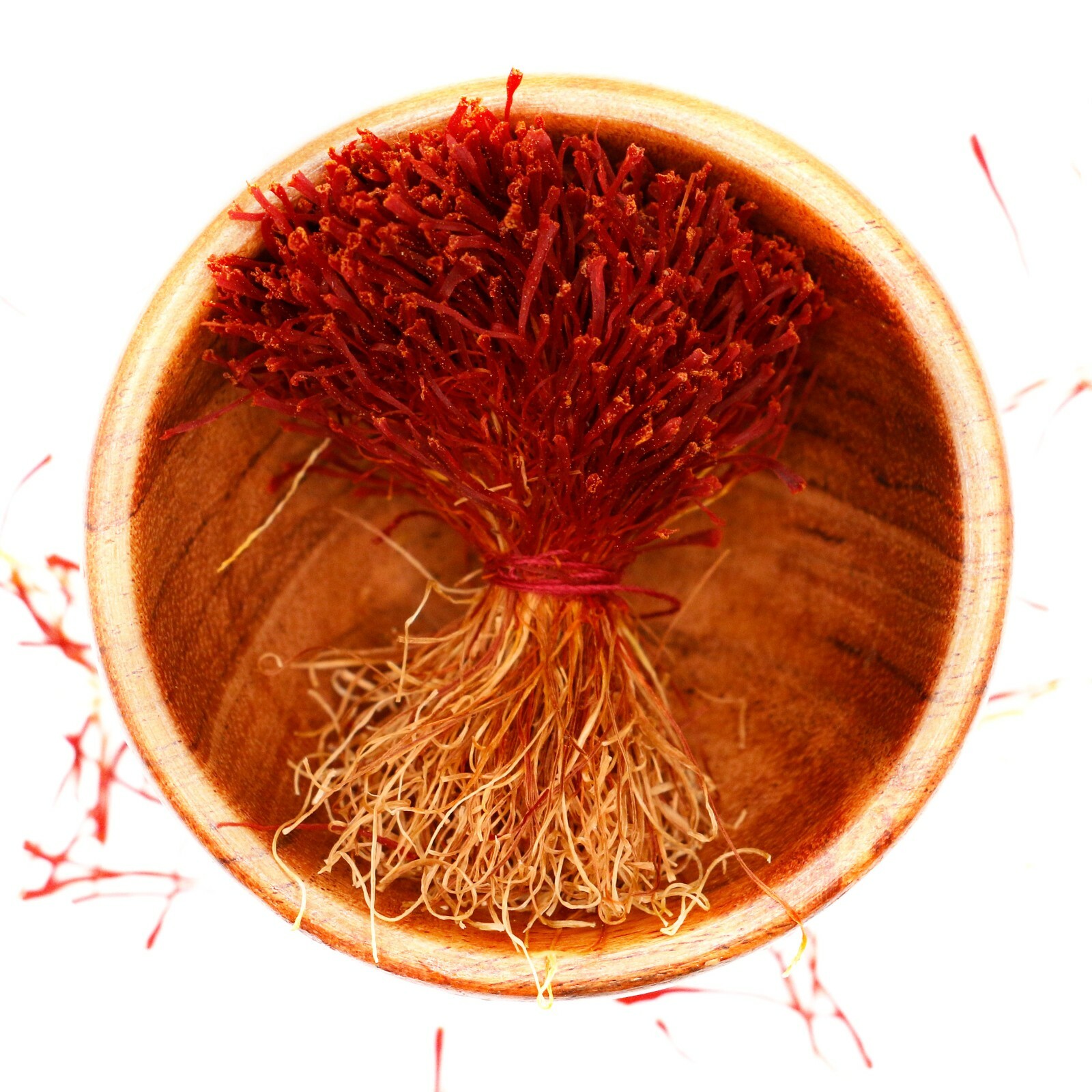
Saffron Bunch, Premium Quality, Perfect for Tea,Rice,Milk,Dessert and more
Saffron Saffron is one of the highly prized spices known since antiquity for its color, flavor and medicinal properties and also can be used as a fabric dye. It is the dried "stigma" or threads of the flower of the Crocus sativus plant. It is a bulbous perennial plant that belongs to the family of Iridaceae, in the genus, Crocus, and known botanically as Crocus sativus. Good saffron crop production demands cool dry climate with well-drained rich fertile soil and irrigation facilities or sufficient amount of rainfall. The flowers are generally harvested during the early-morning hours and soon their stigma separated, allowed to dry, and packed for marketing. Saffron has a distinct flavor that comes from chemical compounds in it such as picrocrocin, and safranal. It also contains a natural carotenoid chemical compound, crocin, which gives saffron its golden-yellow hue. These traits along with its medicinal properties make it a valuable ingredient in many cuisines worldwide. More Detail Ingredients Saffron Basic Preparation No Need Recommended Applications No Taste & Aroma Warm & Earthy Cuisine Indian, Italian, Mediterranean, Middle Eastern Handling / Storage Store saffron in a cool, dark place. Wrap in foil and place in an airtight container. Shelf Life Properly stored, saffron has a shelf-life of 3 - 4 years, after that and the potency starts to diminish.
Specifications
| Return Shipping Will Be Paid By | Buyer |
| All Returns Accepted | Returns Accepted |
| Item Must Be Returned Within | 30 Days |
| Refund Will Be Given As | Money Back |
| Product | Single Spice |
| Expiration Date | 03/31/2023 |
| Brand | Nice Saffron |
Saffron Saffron is one of the highly prized spices known since antiquity for its color, flavor and medicinal properties and also can be used as a fabric dye. It is the dried "stigma" or threads of the flower of the Crocus sativus plant. It is a bulbous perennial plant that belongs to the family of Iridaceae, in the genus, Crocus, and known botanically as Crocus sativus. Good saffron crop production demands cool dry climate with well-drained rich fertile soil and irrigation facilities or sufficient amount of rainfall. The flowers are generally harvested during the early-morning hours and soon their stigma separated, allowed to dry, and packed for marketing. Saffron has a distinct flavor that comes from chemical compounds in it such as picrocrocin, and safranal. It also contains a natural carotenoid chemical compound, crocin, which gives saffron its golden-yellow hue. These traits along with its medicinal properties make it a valuable ingredient in many cuisines worldwide. More Detail Ingredients Saffron Basic Preparation No Need Recommended Applications No Taste & Aroma Warm & Earthy Cuisine Indian, Italian, Mediterranean, Middle Eastern Handling / Storage Store saffron in a cool, dark place. Wrap in foil and place in an airtight container. Shelf Life Properly stored, saffron has a shelf-life of 3 - 4 years, after that and the potency starts to diminish.
Related Items