

White Wisteria floribunda Alba Tree Seeds Climbing Flower Vine Plant Rare Hardy
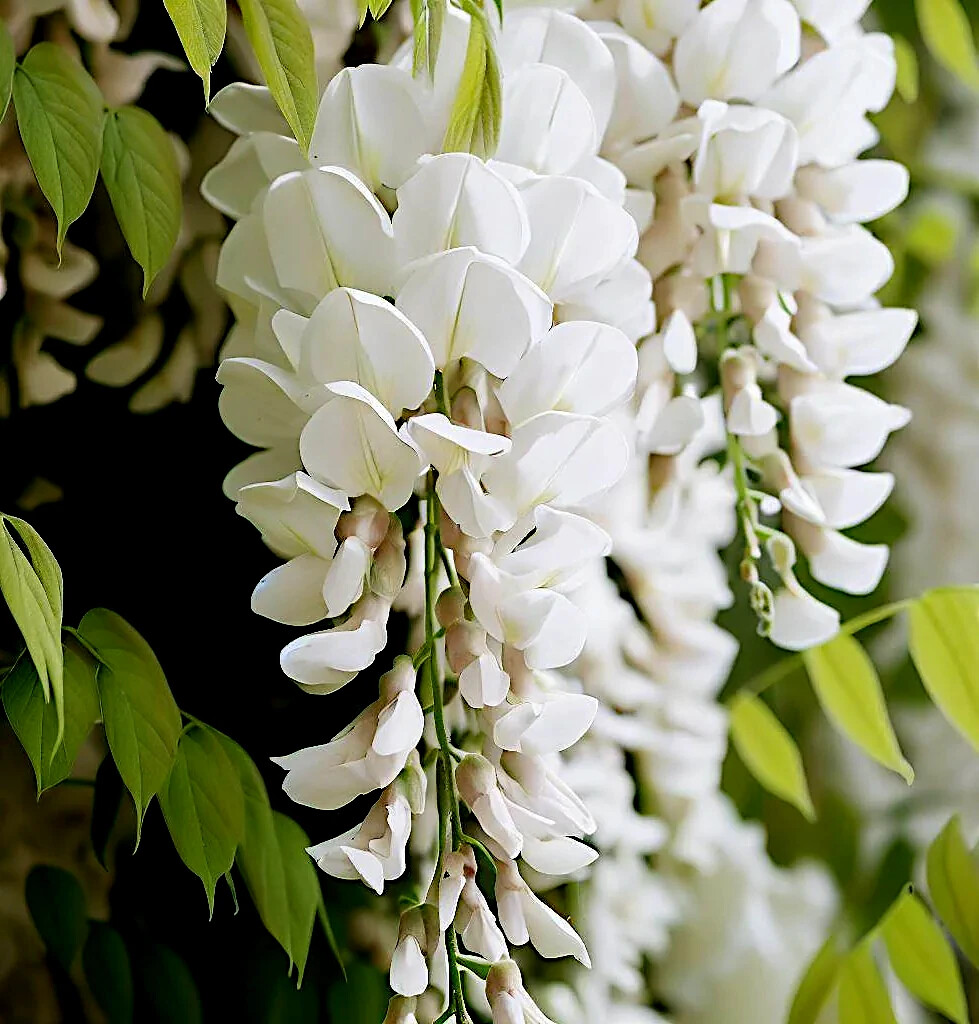
WHITE WISTERIA(Wisteria floribunda Alba)White Flowering Wisteria Alba is an Amazing Vine/Tree that Produces Extra Long, (up to 24 inches!) Clusters of the Most Fragrant and Pristine White Flowers in Late Spring. This Wisteria floribunda Alba is Cold Hardy in USDA Zones 5-9 and Grows Well in a Wide Range of Soil Conditions. Although this Variety of Wisteria is Native to Japan, it was Introduced to the United States in the 1830s as an Ornamental Plant. Famously, Monet Planted and Painted this Beautiful White Wisteria Vine at his Home in Giverny, France where it can Still be Viewed Today. Light: Wisteria performs best in full sun when grown in the North. In the South, down in zone 8, however, it profits from afternoon shade.Soil: The most important soil requirement for growing wisteria is good drainage.Water: Wisteria has average water needs.Temperature and Humidity: Wisteria on occasion is successfully grown in zone 9, but further south than that, the climate is too hot and humid to grow wisteria.USDA Growing Zones 5-9 Wisteria Germination:1) Unlike many seeds, wisteria seeds don’t require very high temperatures to germinate. But, be Sure to Keep nighttime temperatures above 55 degrees Fahrenheit and daytime temperatures around 75 F.2) The tough outer hulls need to be weakened slightly to allow the embryo inside to germinate. To scarify them, Rub a file against the edge of the seed to thin the shell works well. Be careful not to go too deep, which will prevent them from germinating.3) After scarifying the seeds, soak them in hot water for 24 hours to hydrate and further soften the shell. Use a thermos to keep the water warm.4) It’s best to start the seeds in individual 3-inch pots to give the seedlings plenty of space to grow for their first few weeks of life. Choose pots with drainage holes around the bottom and fill them with a soilless seed-starting mixture because it’s sterile, moisture retentive and free from weed seeds, unlike some standard potting soils.5) Sow wisteria seeds 2 inches deep, then set the pots on a tray to catch any water that leaks from the drainage holes; then drizzle water into each pot to settle the soil.6) Check the moisture level in the growing mixture every day and mist the soil with water whenever it feels mostly dry on the surface. Don’t let the soil dry out completely, but also don’t keep it dripping wet because the seeds might rot. 7) Wisteria seeds will take 1-2 Months to sprout, at which point, move the pots near a bright, sunny window to encourage growth."If you need Anything, Please Contact us First"
Specifications
| Return Shipping Will Be Paid By | Seller |
| All Returns Accepted | Returns Accepted |
| Item Must Be Returned Within | 30 Days |
| Climate | Highland |
| Planting Time | 4 Weeks |
| Indoor/Outdoor | Indoor & Outdoor |
| Color | Green |
| Growth Habit | Climbing |
| MPN | N/A |
| Soil Type | Chalk |
| Brand | SeedHead |
| Season Of Interest | Spring |
| Life Cycle | Perennial |
| Watering | Medium |
| Genus | Wisteria |
| Sunlight | Full Sun |
| Features | Air Purifying |
| Cultivating Difficulty | Easy |
| Country/Region Of Manufacture | United States |
WHITE WISTERIA(Wisteria floribunda Alba)White Flowering Wisteria Alba is an Amazing Vine/Tree that Produces Extra Long, (up to 24 inches!) Clusters of the Most Fragrant and Pristine White Flowers in Late Spring. This Wisteria floribunda Alba is Cold Hardy in USDA Zones 5-9 and Grows Well in a Wide Range of Soil Conditions. Although this Variety of Wisteria is Native to Japan, it was Introduced to the United States in the 1830s as an Ornamental Plant. Famously, Monet Planted and Painted this Beautiful White Wisteria Vine at his Home in Giverny, France where it can Still be Viewed Today. Light: Wisteria performs best in full sun when grown in the North. In the South, down in zone 8, however, it profits from afternoon shade.Soil: The most important soil requirement for growing wisteria is good drainage.Water: Wisteria has average water needs.Temperature and Humidity: Wisteria on occasion is successfully grown in zone 9, but further south than that, the climate is too hot and humid to grow wisteria.USDA Growing Zones 5-9 Wisteria Germination:1) Unlike many seeds, wisteria seeds don’t require very high temperatures to germinate. But, be Sure to Keep nighttime temperatures above 55 degrees Fahrenheit and daytime temperatures around 75 F.2) The tough outer hulls need to be weakened slightly to allow the embryo inside to germinate. To scarify them, Rub a file against the edge of the seed to thin the shell works well. Be careful not to go too deep, which will prevent them from germinating.3) After scarifying the seeds, soak them in hot water for 24 hours to hydrate and further soften the shell. Use a thermos to keep the water warm.4) It’s best to start the seeds in individual 3-inch pots to give the seedlings plenty of space to grow for their first few weeks of life. Choose pots with drainage holes around the bottom and fill them with a soilless seed-starting mixture because it’s sterile, moisture retentive and free from weed seeds, unlike some standard potting soils.5) Sow wisteria seeds 2 inches deep, then set the pots on a tray to catch any water that leaks from the drainage holes; then drizzle water into each pot to settle the soil.6) Check the moisture level in the growing mixture every day and mist the soil with water whenever it feels mostly dry on the surface. Don’t let the soil dry out completely, but also don’t keep it dripping wet because the seeds might rot. 7) Wisteria seeds will take 1-2 Months to sprout, at which point, move the pots near a bright, sunny window to encourage growth."If you need Anything, Please Contact us First"
Related Items